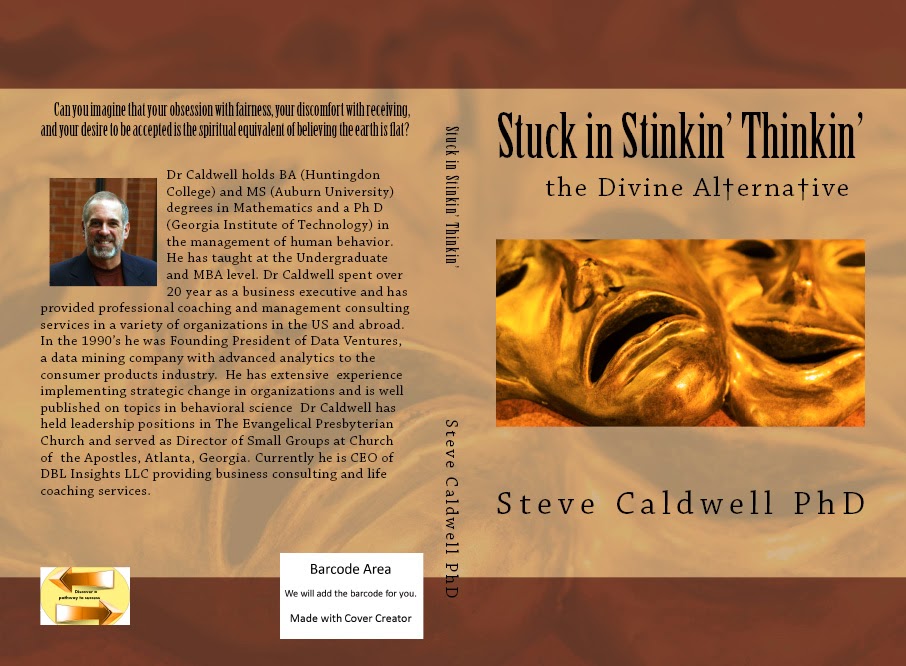
Across the centuries countless peeps have been set back in their Spiritual journey because the church has been subject to flawed practices. It is quite common for me to be engaged with young people who have walked away from Christianity because they have been disillusioned or hurt by the failures of the church in difficult times in their life. I am not chastising the church because its not perfect, but I am calling out to individuals to not be drawn away from God's Truth because the messenger is not perfect. Do not reject Truth because the practice is flawed.
My pet peeve example is what I believe to be the church's Institutional Imperative to preach "progressive sanctification." The idea that one must collaborate with God to complete "sanctification," to advance in Holiness, is not the Gospel truth. Verses like 1 Peter 1: 15 where we are exalted to "be Holy as God is Holy" takes on the progressive nature because pastors are stuck in this box about us needing to "grow in Christ." I know it feels like the Christian walk is a work in progress, but when did "feeling like" define truth. The result of preaching "progressive sanctification" is not freedom, joy and hope. It keeps Christians wondering what's wrong with them, why can't they get free from sin, why can't they be more joyful, why so much despair?
Suppose "definitive sanctification" explained "be Holy"? Maybe "be Holy" simply means be what you are, not become something you aspire to be. It seems to me Jesus goes to great length to explain to us the privileges and provision of His Kingdom. He wants us to know we are IN when we receive Him. We don't have a training period where we have to grow to receive ALL He has to offer. Why does the church have to make us feel that way?
Its not because pastors and theologians are stupid or are intentionally trying to deceive the flock. Its because the human imperative of Social Exchange has so much influence on human sense-making that without us knowing it, it is so difficult to explain to others that Grace completely transforms us. Nothing left for us to do but live it out. "Be Holy" is not a goal to attain, it is a statement of Truth about us encouraging us to be what we are.
To "be Holy" is to in faith appropriate the sanctifying Grace we have been given, not to partner with God to beat the sin out of us, to become something we have yet to attain.
My hearts desire is for Kingdom Dwellers to live from the privileges and provisions of an adopted child of God, not to be constantly feeling like the orphan they used to be. Anything that constrains our joy, freedom, significance, and hope is flawed practice. Truth produces good fruit.
Sunday, April 13, 2014
Testimony of a "Disrupter"
A new book out on finding one's 5%, which is our Intentional Difference, the unique us made to make a difference, is an interesting context to reference an experience I had this week. I was meeting with an old colleague from the 1990's. I had moved on in 1999 to other things, never really looking back. He was sharing with me how several ideas I initiated in the 1990's in Coca-Cola Consolidated, which were totally disruptive then, are now dominant practices 20 years later. In fact the market-based pricing system, which replaced the industry norm of cost plus pricing and transformed the ability to grow sales and margin simultaneously, is now common practice throughout the entire Coca-Cola bottling network in the US. The company (which raised many eyebrows then) i started in early 1990's to support these initiatives is a thriving mainstay in what is now considered normal my thousands of peeps.
In reflecting over those years I also remember how Forest Hill Church had struggled in the early 1990's with strategic decisions of building a new building and planting churches. After several years of watching the leaders postpone the tough decisions, I became Clerk of Session. In that year under "disruptive" leadership the Session initiated steps to build a new sanctuary and to plant 5 churches. Both of these help define the present nature of the Church.
Neither of these impacts I had on organizations have benefited me personally, either economically or in public acclaim. I never sought either. I think the lesson from my life looking back to those who feel compelled to lead from their 5% (iDiff) is that we are not to expect an exchange of our 5% with the world for personal gain. The benefit of leading from the 5% is the joy we receive from being faithful to playing out what God has put in us.
Faithfulness not worldly significance is the fruit of Grace and the message of
Saturday, April 12, 2014
"why do you hate God?"
The movie "God is not Dead" captured much of the cultural debate over why progressives claim God does not exist. Most of the key debate points were there but as always, proving matters of faith is like oil and water, they are incompatible. So the clincher was not air-tight logic, but to get the professor, which was advocating "God is Dead," to admit he hates God. The debate is over at that point and the case for existence of God is "proven" because how can someone hate something that doesn't exist.
The movie claims that many atheists in the Western world were once Christians, but God let them down. He did not manage their circumstances as they felt He should, if He is God and cares about them. While many peeps may not go as far as claiming to be atheist or to "hate God", God has lost relevancy and power because of the same reason, God hasn't delivered. So either He can't or He doesn't want to.
This is the human imperative of exchange, alive and well in our relationship with God. Social exchange was all over the movie. The boy friend of girl with cancer, the Muslim father with his daughter, the Muslim son and his father, the professor and his wife (or live in, not sure), the Christian girl friend of the student defending God, the same guy who had girl friend with cancer could not love his own mother without seeing some exchange reason to do so.
While not saying so exactly, the movie found many ways to illustrate the message of my book
Sunday, March 30, 2014
the benefits of age
as I reflect back over the years, i see the many times that peeps found ways to bring me down, to snare me in their evil ways, to take advantage of my tendencies and weaknesses, to rob me of joy and to destroy me.
"The evil one roams around like a roaring lion seeking whom he may destroy"
"The thief does not come but to steal, kill, and destroy."
At the time, being caught in Satan's snares seemed demoralizing and cause for crawling into my hole to protect myself from the world's judgment. The most prevalent of all human drives is to exchange with the world one's behavior, which gains us acceptance by the world.
Yet, i am told that "there is no condemnation for those who are in Christ Jesus" and that "all things work together for good for those who are called according to His purposes."
The sin in our lives is not the mistakes we make by momentary lapses in faith, but rather to protect the legitimacy of the world's opinion of us by NOT acting in faith because we don't fundamentally trust the promises, privileges, and provisions of Grace. Unfortunately, this is true not only with individuals, but also institutions. The desire to "protect reputation" and be socially accepted can often lead to losing one's missional focus.
While I regret my mistakes, I personally have been one who would rather make errors of commission than errors of omission. But hey, that's just my perspective on being a Kingdom dweller, looking back with more of my earthly life behind me than in front of me.
What will be your perspective in your old age?? something to ponder .....
There are many facets of our human nature that rob us of the joy, significance, freedom, and hope - read about them in
Monday, March 24, 2014
Being Strategic- pricing mechanism matters more than absolute price
I noticed that Rooms To Go sells furniture with a showroom/shipping model. That is, customers visit showrooms scattered around the country to view and select what they wish to purchase. However, the showroom carries no more inventory than is what shown on the floor and the product purchased is shipped to customer location from various warehouse locations.
While this business model provides some strategic benefits to RTG, such as focus cost on showroom appeal to customers versus higher inventories, the way they price is questionable. RTG's market is primary mainstream furniture consumers who are furnishing a home for the first time or investing in entire room(s) for some reason. the furniture is well priced for that furniture purchase occasion, using modest sales discounts to make customers feel they are getting a "deal". This works pretty well as a strategy.
The problem comes in that when a customer finally decides what they wish to buy, they are then "hit" with shipping costs as a add-on to the price. Moreover, the shipping cost is variable depending on what the customer is buying. Generally, customers of RTG are somewhat budget strapped, that's what makes them a RTG customer in the first place. This means that the furniture they decide to purchase is usually on the high end of what they can spend. The add-on shipping charge has a significant cringe influence on the customer, possibly even making them have significant negative emotion. This reaction can put the sale at risk.
This brings up some points about pricing. First, the pricing mechanism is always strategic (an aspect of getting a customer). Second, its not what the price is as much as how the "pricing mechanism" makes the customer feel, and consequently how the mechanism affects the purchase decision.
Too often companies pricing mechanism is not very strategic in that price is more about recouping cost or guaranteeing a predictable Gross Margin than how it works with product to appeal to customers' decision making. For instance, since shipping cost for furniture is dependent on the specific product and the customer has no option, would RTG create a better interaction with customer if shipping were in the displayed price and customer knows what they will pay as they view various product alternatives? Is being more competitive with price by stripping out add-on's, like shipping, while the customer is selecting product, more helpful in getting a customer than the emotional stress caused by applying shipping after customer has somewhat made a purchase decision? Which approach makes RTG more viable in the market?
This is somewhat the same issue as airlines or banks who "fee the customer to death". I am sure it depends on the customer make-up in a market and how add-on costs (fees) are determined. The point is that to be strategic, a business must understand how the pricing mechanism affects customers. How one prices can have as much or more customer impact as what the price actually is.
Effective pricing mechanism is being strategic and being strategic is about "Winning in a Hostile Environment"
available @ amazon.com
Tuesday, March 18, 2014
Are you sure? living with uncertainty
Dylan Evans defines Risk Intelligence (RI) as the ability to correctly assess likelihood that something is true. Our RI measures the success we should have in dealing with future events, which by definition are uncertain. The problem we have as humans with risk management are the tricks our mind plays on us and the effects of social stimuli.
The Ebbinghaus Illusion is one of many psychological flaws that cause us to "see" things differently than they really are. Research shows that the moon is actually the same size at all positions in the sky but appears larger or smaller depending on its surroundings. That is, when an object is surrounded by larger objects, then the focal object appears smaller than it does when it is surrounded by smaller objects.
Another heuristic that biases our predicting the likelihood of an event is "availability." That is, if we have heard about something often and can recall it easily then we place a higher likelihood that event will occur than if we have trouble recalling previous occurrence. This phenomena is particularly "messed up" because of the exposure we have to mass media who control the frequency of events we hear about.
Optimism bias influences us by placing a higher probability on what we wish to happen than on what we don't. This is particularly active in the formation of "bubbles" where there becomes a greater bet on events to continue (such as stock market rising) than probabilities merit.
Confirmation bias occurs when we pay more attention to information that supports what we expect or want to occur than other data that does not. People tend to reach conclusions that fit their thinking and then collect and analyze data to confirm their conclusion than to carefully consider evidence to help them form their conclusion.
Beyond the individual biases that reduce our Risk Intelligence, there is also the "madness of crowds." Social forces promote over confidence, deferring to the "blirtatious" (considering those that are quick to speak up as the smart ones), the ""majority effect" (follow the crowd), and ambiguous communication.
This is just a brief nod to the many influences that reduce our ability to assess risks in the midst of uncertainty. This has implications for countries that go to war and for individuals that pick a college, buy a house, choose a spouse, or take a job. All decisions have risk because the future is uncertain. How we minimize infleunces that constrain our ability to assess risk effectively improves the chances our choices work for us and not against us.
Certainly something worth pondering ......
Sunday, March 16, 2014
Making sense of pain
Today's teaching at church was from the tares and wheat parable of Jesus and the story of Daniel in the lion's den. The common theme was the presence of pain and how are we to make sense of it in our life. The parable of the tares and wheat reveals a few things - evil is with us until the end of time, often we can't tell evil from good until fruit is born, and Jesus is the One who sows good (wheat) while Satan sows evil (tares). Daniel found himself in a difficult situation (den of lions) because those in the world jealous of him contrived against him with evil intent, but evil was not more powerful than God's purpose.
Some points were made that raised some questions for me. One point that causes people to doubt about God is that evil exists while God is Sovereign and all powerful. Another was that pain obviously exists even for the Kingdom dweller and that while Scripture explains how God uses pain in our life to strengthen our faith, God is somewhat silent on His role in the source of our pain. Both of these points seemed to suggest that pain itself is evil.
I do not believe that our pain is evil. What is evil is our desire to get our needs met from the world around us, subjecting us to the disappointment and hurt that comes when the world doesn't cooperate so well. While there are forces of evil at work in our world, evil receives power as our flesh influences us to seek our well being from something in our environment and not from God's redemptive work of Grace. Our human nature wishes to equate pain with evil ignoring God's perspective.
While the sermon on Daniel today was quite a nice picture of Grace, the Reflection for today's service was from Iain Duguild's book "Daniel". The quote from his book went something like this - "God is not committed to our comfort. He is committed to sanctifying us and demonstrating His own glory in and through us and very often, that commitment means He will subject our earthen vessels to pressures that certainly would shatter us, were His Grace not sufficient for us .... His wonderful plan for your life is to sanctify you through trials and tribulations."
I say, "WHAT?" His wonderful plan is making us whole by the redemptive work of the Cross, not to scrub us clean (many theologians view of progressive sanctification) by inflicting pain on us. Jesus said "Oh the JOY of being rejected by the world for His sake because then we are operating in His Kingdom." Daniel was not sanctified by the horrible fear of being eaten by lions. he was sanctified much earlier when he was set apart from others by God for God's purposes. His pain was not evil God thrust on Him to clean him up, in fact the difficult circumstances may not have even been painful for Daniel as he trusted God for his eternal well being. Pain would have been fear that exist absent faith.
The human imperative is (1) to see our life as a progression toward Holiness rather than one where we appropriate the Holiness we have already received when God claimed us (definitive sanctification), and (2) to determine good vs evil based on whether our circumstances are difficult (pain) or favorable (happiness). This is not God's view!!!
While there are tares that coexist in the world with wheat, the wheat is not destroyed or even weakened by the tares. In addition, its not the tares that make the wheat bear good fruit, its the SEED!! Wheat is sanctified to be wheat because of its seed, not because it dukes it out with the tares.
Just some of my pondering today .....
More about the human imperative in my book

Subscribe to:
Posts (Atom)