as I reflect back over the years, i see the many times that peeps found ways to bring me down, to snare me in their evil ways, to take advantage of my tendencies and weaknesses, to rob me of joy and to destroy me.
"The evil one roams around like a roaring lion seeking whom he may destroy"
"The thief does not come but to steal, kill, and destroy."
At the time, being caught in Satan's snares seemed demoralizing and cause for crawling into my hole to protect myself from the world's judgment. The most prevalent of all human drives is to exchange with the world one's behavior, which gains us acceptance by the world.
Yet, i am told that "there is no condemnation for those who are in Christ Jesus" and that "all things work together for good for those who are called according to His purposes."
The sin in our lives is not the mistakes we make by momentary lapses in faith, but rather to protect the legitimacy of the world's opinion of us by NOT acting in faith because we don't fundamentally trust the promises, privileges, and provisions of Grace. Unfortunately, this is true not only with individuals, but also institutions. The desire to "protect reputation" and be socially accepted can often lead to losing one's missional focus.
While I regret my mistakes, I personally have been one who would rather make errors of commission than errors of omission. But hey, that's just my perspective on being a Kingdom dweller, looking back with more of my earthly life behind me than in front of me.
What will be your perspective in your old age?? something to ponder .....
There are many facets of our human nature that rob us of the joy, significance, freedom, and hope - read about them in
Sunday, March 30, 2014
Monday, March 24, 2014
Being Strategic- pricing mechanism matters more than absolute price
I noticed that Rooms To Go sells furniture with a showroom/shipping model. That is, customers visit showrooms scattered around the country to view and select what they wish to purchase. However, the showroom carries no more inventory than is what shown on the floor and the product purchased is shipped to customer location from various warehouse locations.
While this business model provides some strategic benefits to RTG, such as focus cost on showroom appeal to customers versus higher inventories, the way they price is questionable. RTG's market is primary mainstream furniture consumers who are furnishing a home for the first time or investing in entire room(s) for some reason. the furniture is well priced for that furniture purchase occasion, using modest sales discounts to make customers feel they are getting a "deal". This works pretty well as a strategy.
The problem comes in that when a customer finally decides what they wish to buy, they are then "hit" with shipping costs as a add-on to the price. Moreover, the shipping cost is variable depending on what the customer is buying. Generally, customers of RTG are somewhat budget strapped, that's what makes them a RTG customer in the first place. This means that the furniture they decide to purchase is usually on the high end of what they can spend. The add-on shipping charge has a significant cringe influence on the customer, possibly even making them have significant negative emotion. This reaction can put the sale at risk.
This brings up some points about pricing. First, the pricing mechanism is always strategic (an aspect of getting a customer). Second, its not what the price is as much as how the "pricing mechanism" makes the customer feel, and consequently how the mechanism affects the purchase decision.
Too often companies pricing mechanism is not very strategic in that price is more about recouping cost or guaranteeing a predictable Gross Margin than how it works with product to appeal to customers' decision making. For instance, since shipping cost for furniture is dependent on the specific product and the customer has no option, would RTG create a better interaction with customer if shipping were in the displayed price and customer knows what they will pay as they view various product alternatives? Is being more competitive with price by stripping out add-on's, like shipping, while the customer is selecting product, more helpful in getting a customer than the emotional stress caused by applying shipping after customer has somewhat made a purchase decision? Which approach makes RTG more viable in the market?
This is somewhat the same issue as airlines or banks who "fee the customer to death". I am sure it depends on the customer make-up in a market and how add-on costs (fees) are determined. The point is that to be strategic, a business must understand how the pricing mechanism affects customers. How one prices can have as much or more customer impact as what the price actually is.
Effective pricing mechanism is being strategic and being strategic is about "Winning in a Hostile Environment"
available @ amazon.com
Tuesday, March 18, 2014
Are you sure? living with uncertainty
Dylan Evans defines Risk Intelligence (RI) as the ability to correctly assess likelihood that something is true. Our RI measures the success we should have in dealing with future events, which by definition are uncertain. The problem we have as humans with risk management are the tricks our mind plays on us and the effects of social stimuli.
The Ebbinghaus Illusion is one of many psychological flaws that cause us to "see" things differently than they really are. Research shows that the moon is actually the same size at all positions in the sky but appears larger or smaller depending on its surroundings. That is, when an object is surrounded by larger objects, then the focal object appears smaller than it does when it is surrounded by smaller objects.
Another heuristic that biases our predicting the likelihood of an event is "availability." That is, if we have heard about something often and can recall it easily then we place a higher likelihood that event will occur than if we have trouble recalling previous occurrence. This phenomena is particularly "messed up" because of the exposure we have to mass media who control the frequency of events we hear about.
Optimism bias influences us by placing a higher probability on what we wish to happen than on what we don't. This is particularly active in the formation of "bubbles" where there becomes a greater bet on events to continue (such as stock market rising) than probabilities merit.
Confirmation bias occurs when we pay more attention to information that supports what we expect or want to occur than other data that does not. People tend to reach conclusions that fit their thinking and then collect and analyze data to confirm their conclusion than to carefully consider evidence to help them form their conclusion.
Beyond the individual biases that reduce our Risk Intelligence, there is also the "madness of crowds." Social forces promote over confidence, deferring to the "blirtatious" (considering those that are quick to speak up as the smart ones), the ""majority effect" (follow the crowd), and ambiguous communication.
This is just a brief nod to the many influences that reduce our ability to assess risks in the midst of uncertainty. This has implications for countries that go to war and for individuals that pick a college, buy a house, choose a spouse, or take a job. All decisions have risk because the future is uncertain. How we minimize infleunces that constrain our ability to assess risk effectively improves the chances our choices work for us and not against us.
Certainly something worth pondering ......
Sunday, March 16, 2014
Making sense of pain
Today's teaching at church was from the tares and wheat parable of Jesus and the story of Daniel in the lion's den. The common theme was the presence of pain and how are we to make sense of it in our life. The parable of the tares and wheat reveals a few things - evil is with us until the end of time, often we can't tell evil from good until fruit is born, and Jesus is the One who sows good (wheat) while Satan sows evil (tares). Daniel found himself in a difficult situation (den of lions) because those in the world jealous of him contrived against him with evil intent, but evil was not more powerful than God's purpose.
Some points were made that raised some questions for me. One point that causes people to doubt about God is that evil exists while God is Sovereign and all powerful. Another was that pain obviously exists even for the Kingdom dweller and that while Scripture explains how God uses pain in our life to strengthen our faith, God is somewhat silent on His role in the source of our pain. Both of these points seemed to suggest that pain itself is evil.
I do not believe that our pain is evil. What is evil is our desire to get our needs met from the world around us, subjecting us to the disappointment and hurt that comes when the world doesn't cooperate so well. While there are forces of evil at work in our world, evil receives power as our flesh influences us to seek our well being from something in our environment and not from God's redemptive work of Grace. Our human nature wishes to equate pain with evil ignoring God's perspective.
While the sermon on Daniel today was quite a nice picture of Grace, the Reflection for today's service was from Iain Duguild's book "Daniel". The quote from his book went something like this - "God is not committed to our comfort. He is committed to sanctifying us and demonstrating His own glory in and through us and very often, that commitment means He will subject our earthen vessels to pressures that certainly would shatter us, were His Grace not sufficient for us .... His wonderful plan for your life is to sanctify you through trials and tribulations."
I say, "WHAT?" His wonderful plan is making us whole by the redemptive work of the Cross, not to scrub us clean (many theologians view of progressive sanctification) by inflicting pain on us. Jesus said "Oh the JOY of being rejected by the world for His sake because then we are operating in His Kingdom." Daniel was not sanctified by the horrible fear of being eaten by lions. he was sanctified much earlier when he was set apart from others by God for God's purposes. His pain was not evil God thrust on Him to clean him up, in fact the difficult circumstances may not have even been painful for Daniel as he trusted God for his eternal well being. Pain would have been fear that exist absent faith.
The human imperative is (1) to see our life as a progression toward Holiness rather than one where we appropriate the Holiness we have already received when God claimed us (definitive sanctification), and (2) to determine good vs evil based on whether our circumstances are difficult (pain) or favorable (happiness). This is not God's view!!!
While there are tares that coexist in the world with wheat, the wheat is not destroyed or even weakened by the tares. In addition, its not the tares that make the wheat bear good fruit, its the SEED!! Wheat is sanctified to be wheat because of its seed, not because it dukes it out with the tares.
Just some of my pondering today .....
More about the human imperative in my book

Friday, March 14, 2014
Theory of Optimal Distinctivenness
In the early 1990's Marilynn Brewer published research on a theory that has interesting implications on human behavior, especially for leaders. I know the name of the theory is quite daunting but the message of the theory is quite straightforward. Basically the theory states,
A 2011 Harvard Business Review article ("Are You a Good Boss or A Great One") stated a similar principle, "everyone wants to be a valued member of a group AND needs individual recognition."
This notion about human need suggest why leading teams is difficult regardless of the qualities of the leader. The follower is confounded over its motivation as a team member. This internal conflict of need in the follower is complicated by the strength of other needs such as McClelland's need for affiliation (Naff), power (Npow) and achievement (Nach). Individuals high on Nach are more likely to be motivated by their desire for distinguishing themselves without much regard for team membership, high Npow will use their individual competencies to gain control of the group members, and high Naff will more likely abdicate their individual competencies to gain acceptance of other team members.
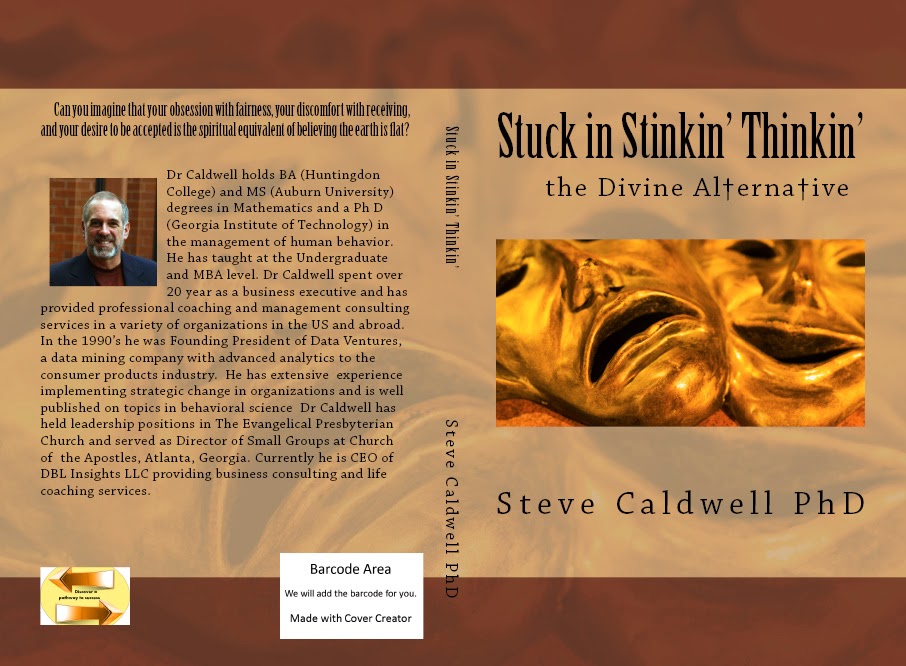
Ultimately within a relational context people are constantly determining the trade-offs between attending to their own unique intrinsic motivation and the motivation to be seen as legitimate, conforming to norms of the group. In my book "Stuck in Stinkin Thinkin" I discuss the human desire to engage in social exchange to maintain equilibrium with others in their life, which introduces fear, anxiety, and pride that constrains our joy, significance, freedom, and hope. These qualities are more present when we operate out of our intrinsic motivation, our calling.
The main reason we fail to intentionally play out what has been put in us can be explained by the Theory of Optimal Distinctiveness, a conflict of need. I have found in other theories and through experience that most people do not risk acceptance of others in order to display their specialness, partly explaining the mondane, unexceptional life many people live.
Its certainly something that we all should ponder .....
“humans
are characterized by two opposing needs that govern
the
relationship between the self-concept and membership in
social
groups. The first is the need for assimilation and inclusion,
a desire for belonging
that motivates immersion in
social groups.
The
second is a need for differentiation that operates
in opposition
to the need for
immersion”A 2011 Harvard Business Review article ("Are You a Good Boss or A Great One") stated a similar principle, "everyone wants to be a valued member of a group AND needs individual recognition."
This notion about human need suggest why leading teams is difficult regardless of the qualities of the leader. The follower is confounded over its motivation as a team member. This internal conflict of need in the follower is complicated by the strength of other needs such as McClelland's need for affiliation (Naff), power (Npow) and achievement (Nach). Individuals high on Nach are more likely to be motivated by their desire for distinguishing themselves without much regard for team membership, high Npow will use their individual competencies to gain control of the group members, and high Naff will more likely abdicate their individual competencies to gain acceptance of other team members.
Ultimately within a relational context people are constantly determining the trade-offs between attending to their own unique intrinsic motivation and the motivation to be seen as legitimate, conforming to norms of the group. In my book "Stuck in Stinkin Thinkin" I discuss the human desire to engage in social exchange to maintain equilibrium with others in their life, which introduces fear, anxiety, and pride that constrains our joy, significance, freedom, and hope. These qualities are more present when we operate out of our intrinsic motivation, our calling.
The main reason we fail to intentionally play out what has been put in us can be explained by the Theory of Optimal Distinctiveness, a conflict of need. I have found in other theories and through experience that most people do not risk acceptance of others in order to display their specialness, partly explaining the mondane, unexceptional life many people live.
Its certainly something that we all should ponder .....
Friday, March 7, 2014
Commitment - there is more than 1 kind, you know
The study of commitment in organizations has been around for decades. Commitment is important because it has been found to positively affect satisfaction, retention, and good citizenship behavior. More recently scholars, such as Meyer, Allen, Mowday and Porter, have advocated for three facets of commitment to help alleviate inconsistencies in how organizational commitment influence employees.
The three different forms of commitment are (1) affective, (2) normative, and (3) continuance. Affective commitment is an emotional attachment that results from the individual desiring to be identified or associated with the relationship. Individuals give their effort to another because they "want to." Normative commitment is an attachment one feels out of obligation or duty. Here individuals stay involved in relationship with another because they "have to." Finally, continuance commitment is the attachment one has to another because they have no other choice, their options are limited. Individuals who have continuance commitment in a relationship remain because they "have to."
Its pretty easy to see why research has found that affective commitment results in the strongest service and association employees have in relationship with their organization, and without stress and burnout. There are a variety of reasons people have each kind of commitment, but affective is the most volitional and therefore results in the highest level of supportive behavior.
The understanding we have of commitment to an organization has implications in commitment in other relationships, such as friendships, marriage or parenting. I would want someone to be affectively committed, willfully desiring to be with me, to support me, and to serve me because they wish to, not because they are obligated to me out of duty or have to because its their best or only option.
This is somewhat the message of my book on sense-making. Our human nature, through the equilibrium imperative, tends to orient us towards normative and continuance commitment. This quietly bleeds over into our thinking about God and our relationship with Him. When our response to Him is duty, we either become legalistic in trying to serve or we abandon the relationship because it is not salient to us,
You can read more about this in
The three different forms of commitment are (1) affective, (2) normative, and (3) continuance. Affective commitment is an emotional attachment that results from the individual desiring to be identified or associated with the relationship. Individuals give their effort to another because they "want to." Normative commitment is an attachment one feels out of obligation or duty. Here individuals stay involved in relationship with another because they "have to." Finally, continuance commitment is the attachment one has to another because they have no other choice, their options are limited. Individuals who have continuance commitment in a relationship remain because they "have to."
Its pretty easy to see why research has found that affective commitment results in the strongest service and association employees have in relationship with their organization, and without stress and burnout. There are a variety of reasons people have each kind of commitment, but affective is the most volitional and therefore results in the highest level of supportive behavior.
The understanding we have of commitment to an organization has implications in commitment in other relationships, such as friendships, marriage or parenting. I would want someone to be affectively committed, willfully desiring to be with me, to support me, and to serve me because they wish to, not because they are obligated to me out of duty or have to because its their best or only option.
This is somewhat the message of my book on sense-making. Our human nature, through the equilibrium imperative, tends to orient us towards normative and continuance commitment. This quietly bleeds over into our thinking about God and our relationship with Him. When our response to Him is duty, we either become legalistic in trying to serve or we abandon the relationship because it is not salient to us,
You can read more about this in
Wednesday, March 5, 2014
a word about change
"Change is the experience of going from one
period of stability, through instability, to another period of stability. There
are a number of myths and misunderstandings concerning why change is resisted
that are worth considering.
The main myth about change is that 'people are naturally resistant to change.' There is no evidence in the research of change that it is in the nature of humans to resist change. In fact it is well known that people enjoy and easily adapt to change under certain conditions. For example, if you discovered that you could get to work or school 5 minutes faster and save gas by going a different way, you would change to the new route without hesitation. However, if your spouse or parent or boss told you that you should go to work or school on a different route because they thought it would be better for you, you may have some hesitation to change. It is a more appropriate statement to say, 'people are normally resistant to imposed change.'
Why does this distinction matter? If you are responsible for
a change initiative in your organization and believe it’s in the nature of
the change participants to resist the change, then you are a victim of their
nature. This assumption makes you hesitant or powerless to act on behalf of the
change. However, if you believe that resistance is due to situational factors,
you will focus on eliminating the environmental obstacles to change. Research
has found four situational reasons people resist imposed change:
+ Comfortable
with the way things are
+ Change
is viewed as a threat (fear of unknown)
+ The
costs outweigh the benefits
+ Cynicism
that the change will be mishandled by sponsors of the change.
Some scholars believe resistance requires breaking social habits. For one to 'break out' of entrenched patterns of behavior, they must experience disequilibrium, discomfort, and dissatisfaction.
Ultimately, for individuals to change they must perceive the risk of status quo to be greater than the risk of the new!
While reducing employee resistance to planned change has received the greatest attention of change scholars and practitioners, organizational reality has been found to consist of many change demands on employees that do not flow through formal change initiatives. Creating a healthy organization, one that is ecologically viable, is an overall organizational ability to renew itself, faster than competition and as the ecology demands it."
Making change missional and inviting employees to come along has a nice ring to it!
exerts from
Subscribe to:
Posts (Atom)


