All of us want life to be good. We want to be blessed. People should be nice, we should enjoy the comforts of life - good food, warm home, people who love us. While some may deny it, only the true hedonists seek only physical pleasure. The human condition is made with a soul that desperately wants to be satisfied.
If you combine what psychologists, sociologists, theologians, and anthropologists have found about the soul's needs, you could probably summarize it with six dimensions: joy, purpose, hope, freedom, esteem, belonging.
The soul receives its signals for well-being from our physical reality and our invisible reality, although many deny there is a spiritual reality. There are many philosophies and religions that seek to explain the interaction of the body, soul, and spirit, all pointing to how we can life a satisfied life.
When you sort through all the experts views on the paths to satisfaction, there are really only two. We can either earn benefits from our circumstances through exchanging our actions with the world around us OR we can receive what we are given from an unmerited favor. The Bible calls the former "walking in the flesh" and the latter "walking in the Spirit." The former leads to death and the latter leads to life.
It is obvious that this reference to "death" and "life" does not refer to our physical body's life (what the Greeks called "bios"). No one escapes death of the body. Then this idea of two ways to walk must refer to whether the soul has life or not. There may be better theological ways to express this but the bottom line is that having what we need bestowed on us by the One who has the power to give us what we need is a more excellent way than earning what we need by our actions in the world.
The privileges and provisions of the Heavenlies shower our soul with satisfaction as we receive, in faith, what we have been given. This is God's plan for our good and His Glory.
There are only two ways to walk, two worldviews
“Either gain through exchange or receive the gift – which path do I take?”
Saturday, March 19, 2016
Wednesday, March 16, 2016
Just how did we get into this pickle?
Obama is eloquent, but mainly wrong. Trump is mainly right, but awfully crude. How did US politics arrive here? Why is our political process so broken? Why can't we solve problems, which have good solutions that readily exist?
Just how did we get into this pickle?
Society has done this to itself. It is not Obama's fault or Trump's fault. It is the natural result of power flowing to central government's control. It is exactly what our Founding Fathers tried to prevent. When power is distributed, the collection and distribution goods and services find their way to where they need to go through effective processes (btw, this is what justice is). Those processes of collection and distribution that work the best, get adopted, and those that do not, go by the wayside.
But when enough people in society claim that the winners do not deserve to win as much as they do, and those who cannot or will not compete are getting less that those who do contribute, then society authorizes government to grab more power to fix this inequality in the name of "social justice" (which is not justice at all). Government is just a central planning power that collects and distributes goods and services in ways a few "smart" people want. Government grows as society cannot trust the diffused power of the masses (called markets), where merit (innovation and productivity) determines who gets what.
Once central government gets this power, then there are individuals who want to hold the power and those in the market, who want to control those in government who hold power (enter lobbyists). Competition is no longer the sport of markets, the power struggle of capitalists that comes from meeting society's needs, but competition becomes the political fight to gain power to collect and distribute resources. As the government's percent of the nation's GDP grows (currently is north of 20% and tripled in past 100 years), the greater the fight for political power and the greater the contempt politicians have for capitalists.
Sound familiar??
Still wondering how we got into this pickle? We need more voters pondering this ....
Just how did we get into this pickle?
Society has done this to itself. It is not Obama's fault or Trump's fault. It is the natural result of power flowing to central government's control. It is exactly what our Founding Fathers tried to prevent. When power is distributed, the collection and distribution goods and services find their way to where they need to go through effective processes (btw, this is what justice is). Those processes of collection and distribution that work the best, get adopted, and those that do not, go by the wayside.
But when enough people in society claim that the winners do not deserve to win as much as they do, and those who cannot or will not compete are getting less that those who do contribute, then society authorizes government to grab more power to fix this inequality in the name of "social justice" (which is not justice at all). Government is just a central planning power that collects and distributes goods and services in ways a few "smart" people want. Government grows as society cannot trust the diffused power of the masses (called markets), where merit (innovation and productivity) determines who gets what.
Once central government gets this power, then there are individuals who want to hold the power and those in the market, who want to control those in government who hold power (enter lobbyists). Competition is no longer the sport of markets, the power struggle of capitalists that comes from meeting society's needs, but competition becomes the political fight to gain power to collect and distribute resources. As the government's percent of the nation's GDP grows (currently is north of 20% and tripled in past 100 years), the greater the fight for political power and the greater the contempt politicians have for capitalists.
Sound familiar??
Still wondering how we got into this pickle? We need more voters pondering this ....
Saturday, March 12, 2016
what do you know about the culture war that rages?
You may often hear people talking about the "cultural wars." On the surface you may think differences in religious beliefs or cultural issues with globalization. However, it actually involves factions of a single society trying to win control of public policy that affects each party's rights, such as marriage, life, speech, religion, privacy, etc. Culture wars have always existed in history, but can be more pronounced or obvious in democratic societies where power to affect what goes on in society is decided by the public, not by authoritative tyrants.
Culture is basically defined as the norms and values of any collection of people, we will call a social order. Culture itself is an informal control system that is embraced by the social order. When some of the people want everyone "to march to their drummer", there is a race by opposing parties to turn cultural norms and values into law. This is generally where the war begins. Over time, laws and policies turn the informal control of culture into formal control, thereby it is no longer culture that influences what people do, but regulation. This is why people who fight the cultural wars proclaim that policy follows culture, not vice versa. So, when law is enacted, the cultural war is over.
So, where best is the war of cultures waged? The answer may be in how culture is formed and changed? Culture is an interesting phenom since no one really can see it, like the wind. You can see its effects on people's behavior, but you cannot see "it". Societies usually represent their culture with symbols and ceremonies. Symbols come in many different forms and ceremonies really flow from how people are "rewarded" and "punished". I want to focus on symbols, but more specifically one type of symbol, WORDS.
One of my very first posts and a favorite lecture topic is "If a word can mean anything, then it means nothing." http://profoncall.blogspot.com/2011/02/if-word-can-mean-anything-then-it-means.html
This deals with the way culture works to redefine a word so that something that is not true becomes true. This is the outcome of relativism. redefining words to define new "truth" is so important because of my second point on WORDS, the power behind the narrative. The US culture has moved more liberal and away from its roots because of these two points - liberals have controlled the choice and use of words - mainly through controlling the intellectual centers of education and society's mouthpiece, media and entertainment.
There are so many examples of this a student could write a Ph D dissertation just on this topic. I wrote in my last several blogs about the words "justice", "deserves", and "rights." The most foundational word to the cultural war has been redefining the word "tolerance" and raising the new definition up to be society's highest virtue. "Tolerance"no longer means "to respect a different idea or opinion." It now means that we must consider any different idea or opinion as equally true to what we believe is true or we are bigoted and vile.
Even the Christian faith has been caught up in the cultural winds of change. We can no longer "judge" because that is discriminatory. But "to judge" has historically meant discerning right from wrong or guilt and innocent, not condemnation. This meaning of "judge" no longer has place in our culture. Historically, being guilty or wrong may have had punishment associated with it, but now judge has been changed to mean condemnation, so "to judge" is no longer a virtue. Everybody must win, no one can lose.
Now "righteousness" has become the right behavior or doing good things, not being justified or made Holy by God. The word Christian has been so redefined that we have to put "evangelical" in front of it to mean Christian and now we have to qualify "evangelicals" as being "true evangelicals". Ay yi yi
This topic is so big I can not do it "justice" in this blog. I can only say that until those whose calling is to "fight" the cultural battle learns how to control the narrative, to defend the absolute and unwavering meaning of key words, they cannot win it in the legislative and legal systems. One final point on controlling the narrative - you cannot begin any argument with a core assumption that threatens the listener. For the narrative to penetrate and transform the culture, the starting point of any argument must be understandable and accessible to society so that people are willing to go down that path with you. Do not start someone on grasping the power of faith with "faith in God", People who are adverse to God or ignorant of God must first grasp the realities and truths about faith itself and then discover that God best delivers that reality.
Those in politics and religion, who feel that society is off path and needs correction, need to do a lot of pondering on this .....
Culture is basically defined as the norms and values of any collection of people, we will call a social order. Culture itself is an informal control system that is embraced by the social order. When some of the people want everyone "to march to their drummer", there is a race by opposing parties to turn cultural norms and values into law. This is generally where the war begins. Over time, laws and policies turn the informal control of culture into formal control, thereby it is no longer culture that influences what people do, but regulation. This is why people who fight the cultural wars proclaim that policy follows culture, not vice versa. So, when law is enacted, the cultural war is over.
So, where best is the war of cultures waged? The answer may be in how culture is formed and changed? Culture is an interesting phenom since no one really can see it, like the wind. You can see its effects on people's behavior, but you cannot see "it". Societies usually represent their culture with symbols and ceremonies. Symbols come in many different forms and ceremonies really flow from how people are "rewarded" and "punished". I want to focus on symbols, but more specifically one type of symbol, WORDS.
One of my very first posts and a favorite lecture topic is "If a word can mean anything, then it means nothing." http://profoncall.blogspot.com/2011/02/if-word-can-mean-anything-then-it-means.html
This deals with the way culture works to redefine a word so that something that is not true becomes true. This is the outcome of relativism. redefining words to define new "truth" is so important because of my second point on WORDS, the power behind the narrative. The US culture has moved more liberal and away from its roots because of these two points - liberals have controlled the choice and use of words - mainly through controlling the intellectual centers of education and society's mouthpiece, media and entertainment.
There are so many examples of this a student could write a Ph D dissertation just on this topic. I wrote in my last several blogs about the words "justice", "deserves", and "rights." The most foundational word to the cultural war has been redefining the word "tolerance" and raising the new definition up to be society's highest virtue. "Tolerance"no longer means "to respect a different idea or opinion." It now means that we must consider any different idea or opinion as equally true to what we believe is true or we are bigoted and vile.
Even the Christian faith has been caught up in the cultural winds of change. We can no longer "judge" because that is discriminatory. But "to judge" has historically meant discerning right from wrong or guilt and innocent, not condemnation. This meaning of "judge" no longer has place in our culture. Historically, being guilty or wrong may have had punishment associated with it, but now judge has been changed to mean condemnation, so "to judge" is no longer a virtue. Everybody must win, no one can lose.
Now "righteousness" has become the right behavior or doing good things, not being justified or made Holy by God. The word Christian has been so redefined that we have to put "evangelical" in front of it to mean Christian and now we have to qualify "evangelicals" as being "true evangelicals". Ay yi yi
This topic is so big I can not do it "justice" in this blog. I can only say that until those whose calling is to "fight" the cultural battle learns how to control the narrative, to defend the absolute and unwavering meaning of key words, they cannot win it in the legislative and legal systems. One final point on controlling the narrative - you cannot begin any argument with a core assumption that threatens the listener. For the narrative to penetrate and transform the culture, the starting point of any argument must be understandable and accessible to society so that people are willing to go down that path with you. Do not start someone on grasping the power of faith with "faith in God", People who are adverse to God or ignorant of God must first grasp the realities and truths about faith itself and then discover that God best delivers that reality.
Those in politics and religion, who feel that society is off path and needs correction, need to do a lot of pondering on this .....
What is right about "rights"?
There have been so many instances lately where liberals have "shouted down" anyone who opposes them. This is the liberal tactic by the way, to control the narrative by shouting, not to win by debate. The liberals are shouting at conservatives because they believe conservatives want to restrict their rights to things like same sex marriage, abortion, marijuana, and so forth.
The conservatives shout back that the liberals are restricting their right to free speech by the protests. Do you see anything ironic in all of this? Is it the least bit strange that each side fights from a position of defending "their rights."
This situation is probably not surprising because the US Constitution strongly places "rights" at the forefront of our society and culture. We Americans are proud of standing on our rights. The problem we have is that human nature's idea of rights and the founding fathers view of rights are not exactly the same.
Liberals believe that we were granted by our Constitution the "Bill of Rights TO" get what we want. No, that's not what the Constitution says. That is what flawed human nature tells us, "we deserve it." The Constitution focuses right on our "rights FROM" the federal government dictating or intruding on our "right" to pursue our individual happiness. The liberties provided to us by The Constitution deal with the "right" to worship, speak, have guns, assemble, etc. without the government telling us what and how to do it.
So, why do conservatives claim that liberals are violating their Constitutional "rights" when they protest and constrain conservative rallies and speakers? Liberal citizens who protest are not the federal government, they are just bullies. Instead of crying "foul", "you are violating my rights", conservatives should change the narrative. Conservatives should call liberals "BULLIES", shine a light on their tactics for self-serving control. But don't make the conversation about the Constitution because protesters are not the Federal Government, who btw we are being protected from by the "Bill of Rights."
We can better control the narrative if we do more pondering first .....
The conservatives shout back that the liberals are restricting their right to free speech by the protests. Do you see anything ironic in all of this? Is it the least bit strange that each side fights from a position of defending "their rights."
This situation is probably not surprising because the US Constitution strongly places "rights" at the forefront of our society and culture. We Americans are proud of standing on our rights. The problem we have is that human nature's idea of rights and the founding fathers view of rights are not exactly the same.
Liberals believe that we were granted by our Constitution the "Bill of Rights TO" get what we want. No, that's not what the Constitution says. That is what flawed human nature tells us, "we deserve it." The Constitution focuses right on our "rights FROM" the federal government dictating or intruding on our "right" to pursue our individual happiness. The liberties provided to us by The Constitution deal with the "right" to worship, speak, have guns, assemble, etc. without the government telling us what and how to do it.
So, why do conservatives claim that liberals are violating their Constitutional "rights" when they protest and constrain conservative rallies and speakers? Liberal citizens who protest are not the federal government, they are just bullies. Instead of crying "foul", "you are violating my rights", conservatives should change the narrative. Conservatives should call liberals "BULLIES", shine a light on their tactics for self-serving control. But don't make the conversation about the Constitution because protesters are not the Federal Government, who btw we are being protected from by the "Bill of Rights."
We can better control the narrative if we do more pondering first .....
Sunday, March 6, 2016
Does being off a little matter much?
There are many areas in life where being off much doesn't result in any real problem. If you are going on a picnic and you hear the temperature will be 70 but it is really 65, then it does not affect your enjoyment. In golf if your putter head is slightly off line and the putt is 2 inches, you will make the putt. If you are practicing the violin at home by yourself and the violin is slightly off tune, the sound of your play is still fine.
However, if your putt is 20 feet and your putter head is slightly offline, you miss the putt badly. If you are playing in an orchestra and your violin has not been tuned, the harmony with other instruments is reduced and the sound of the song is not what it is designed to be.
If you really think about it, many people for much of life believe that being off a little may not be best, but it is really not much of a BIG DEAL. The big questions, like "why am I here?", do not need to be answered. Being a part of a few joyous moments is what life is all about. We become what some have called "individual meaning makers." We dupe ourselves into focusing on temporary, transcendental experiences and avoid the "big things" in life. We piece together scraps of half truths, cliches, and experiences that we think define the life we are designed to live. We accept what others tell us about ourselves and we live beneath our privilege. We feel fine about life as we live it, not even knowing that being an inch off on truth can produce a life that misses the mark by 10 feet later, that not being synced with the tuning fork causes our music to be off key.
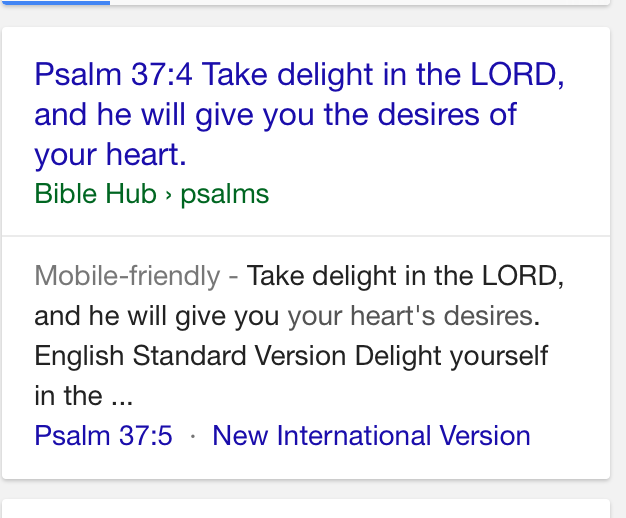
Here is an example.
You may be saying, "what is that?" Its is a verse that many people have heard often, "delight in the Lord and He will give you the desires of your heart." Notice what the NIV says. "he will give you your heart's desires." Is the difference BIG? not in literary terms. But is the little difference BIG? Dang straight. "the desires of your heart" are what is aspirational about what is in your heart. "Your heart's desires" are your aspirations that YOU put into your heart. The difference is "whose aspirations are in your heart?" Yours or God's?
The natural tendency to see God through Social Exchange would influence how we understand this Scripture. We want it to say, "if we do this, then God will do that." In other words, if we delight in Him, He will give us what we want. Yet, this is not what God wants us to know, so it is not what the Scripture really says (this is not uncommon for the NIV translation). God wants us to know that when we think He is the "cat's meow", that when we just love being with Him and adore Him, then He will give us what we aspire to. What we have in our heart (the seat of our motives) will be from Him. This is not a self-serving exchange transaction, but simply an outcome of our delight.
Does this little difference really matter? Here is a recent pic I saw posted by a Christian who is very sincere, mature and dedicated. This shows how subtle but how profound this little difference can be.
You can see from this that the one who produced this is playing off of this Scripture, but it is not right. It says I have prayed, not delighted. Then it positions what God will do as a result of what I do. I pray, God delivers. It feels so good. It looks so right. BUT it is off a small bit, with BIG consequences.
Here's the issue. When we approach God from a position of exchange, which is our nature, we set ourselves up to be disappointed and maybe even cynical about God. At a minimum, we run out of energy trying to do for Him what He wants so He'll do for us what we want.
What happens when we buy-in to this plaque and then things don't turn out for our child as we want? Don;t get me wrong, praying for our children and grandchildren is a great walk of faith. Wishing great things for our children is good. But this is not what God tells us in His word. The seemingly little difference between exchange and grace is everything.
We pray, but God's favor is unmerited. We serve, but God's favor is unconditional. Mainly we delight in Him, we adore Him, and our love for Him has nothing to do with what He does in our circumstances. He has chosen to give us all the privileges and provisions of the Heavenlies. He tells us that numerous times. Falling back into a perspective of exchange with God is easy to do. It seems like its a little thing, but the consequences of living joyfully with Him rather than living in guilt, anxiety, disappointment and questioning Him is BIG.
This is worth continual pondering for those who are called by His name ...
However, if your putt is 20 feet and your putter head is slightly offline, you miss the putt badly. If you are playing in an orchestra and your violin has not been tuned, the harmony with other instruments is reduced and the sound of the song is not what it is designed to be.
If you really think about it, many people for much of life believe that being off a little may not be best, but it is really not much of a BIG DEAL. The big questions, like "why am I here?", do not need to be answered. Being a part of a few joyous moments is what life is all about. We become what some have called "individual meaning makers." We dupe ourselves into focusing on temporary, transcendental experiences and avoid the "big things" in life. We piece together scraps of half truths, cliches, and experiences that we think define the life we are designed to live. We accept what others tell us about ourselves and we live beneath our privilege. We feel fine about life as we live it, not even knowing that being an inch off on truth can produce a life that misses the mark by 10 feet later, that not being synced with the tuning fork causes our music to be off key.
Here is an example.
You may be saying, "what is that?" Its is a verse that many people have heard often, "delight in the Lord and He will give you the desires of your heart." Notice what the NIV says. "he will give you your heart's desires." Is the difference BIG? not in literary terms. But is the little difference BIG? Dang straight. "the desires of your heart" are what is aspirational about what is in your heart. "Your heart's desires" are your aspirations that YOU put into your heart. The difference is "whose aspirations are in your heart?" Yours or God's?
The natural tendency to see God through Social Exchange would influence how we understand this Scripture. We want it to say, "if we do this, then God will do that." In other words, if we delight in Him, He will give us what we want. Yet, this is not what God wants us to know, so it is not what the Scripture really says (this is not uncommon for the NIV translation). God wants us to know that when we think He is the "cat's meow", that when we just love being with Him and adore Him, then He will give us what we aspire to. What we have in our heart (the seat of our motives) will be from Him. This is not a self-serving exchange transaction, but simply an outcome of our delight.
Does this little difference really matter? Here is a recent pic I saw posted by a Christian who is very sincere, mature and dedicated. This shows how subtle but how profound this little difference can be.
You can see from this that the one who produced this is playing off of this Scripture, but it is not right. It says I have prayed, not delighted. Then it positions what God will do as a result of what I do. I pray, God delivers. It feels so good. It looks so right. BUT it is off a small bit, with BIG consequences.
Here's the issue. When we approach God from a position of exchange, which is our nature, we set ourselves up to be disappointed and maybe even cynical about God. At a minimum, we run out of energy trying to do for Him what He wants so He'll do for us what we want.
What happens when we buy-in to this plaque and then things don't turn out for our child as we want? Don;t get me wrong, praying for our children and grandchildren is a great walk of faith. Wishing great things for our children is good. But this is not what God tells us in His word. The seemingly little difference between exchange and grace is everything.
We pray, but God's favor is unmerited. We serve, but God's favor is unconditional. Mainly we delight in Him, we adore Him, and our love for Him has nothing to do with what He does in our circumstances. He has chosen to give us all the privileges and provisions of the Heavenlies. He tells us that numerous times. Falling back into a perspective of exchange with God is easy to do. It seems like its a little thing, but the consequences of living joyfully with Him rather than living in guilt, anxiety, disappointment and questioning Him is BIG.
This is worth continual pondering for those who are called by His name ...
What would you say?
What would you say when someone asks you, "what's the difference between a Republican and a Democrat?" Hillary is famous for flopping on the difference between a Democrat and a Socialist, but that's because the boundaries are much more blurred. This has been an interesting year in politics because even the Republicans are somewhat confused over what a Republican is. People who never disagreed are finding themselves in conflict over which Republican is the most Republican. Yet, we have more interest in politics than ever in my lifetime.
The good news is people are asking. The bad news is too many people don't know. In some ways it is simple, but in many ways it is not. First, there is a fundamental difference between the two parties regarding the size and role of government. This difference is as old as our country. Jefferson wanted the individuals to be the driving force of society and Hamilton thought power needed to be more consolidated. Second, the world is more complex. Issues exist in the economic, social moral, and global areas of society. So there are now dozens of variations in policy ideas within those two basic distinctions that people prioritize differently. This is why a traditional conservative may chose one of 5 or 6 candidates as their top pick. It is also why there are areas Republicans disagree, but some agree with Democrats.
Recognizing that I could never map out all of these varying paths into specific policies like immigration, tax plans, health care, etc., I still believe people who vote should have some basic understanding of what each party believes. I have been asked the question about Republicans and Democrats from people ranging from 80 year old golfing buddies to a teen age grand daughter. I found when I explained this to college students, many clarified their positions and often switched parties because they had not understood what their political affiliation meant.
The good news is people are asking. The bad news is too many people don't know. In some ways it is simple, but in many ways it is not. First, there is a fundamental difference between the two parties regarding the size and role of government. This difference is as old as our country. Jefferson wanted the individuals to be the driving force of society and Hamilton thought power needed to be more consolidated. Second, the world is more complex. Issues exist in the economic, social moral, and global areas of society. So there are now dozens of variations in policy ideas within those two basic distinctions that people prioritize differently. This is why a traditional conservative may chose one of 5 or 6 candidates as their top pick. It is also why there are areas Republicans disagree, but some agree with Democrats.
Recognizing that I could never map out all of these varying paths into specific policies like immigration, tax plans, health care, etc., I still believe people who vote should have some basic understanding of what each party believes. I have been asked the question about Republicans and Democrats from people ranging from 80 year old golfing buddies to a teen age grand daughter. I found when I explained this to college students, many clarified their positions and often switched parties because they had not understood what their political affiliation meant.
Let me walk you though this maze. Its really not that complicated. First, the political position of a party affects two areas: (1) Societal Needs and "Rights" and (2) Helping Society's Vulnerable. Democrats approach society's needs with the assumption that goods and services are best collected and distributed by some centrally devised plan that 'experts' can control. Note Hillary's statement that "successful people should pay more of what they earn." Republicans assume that society's needs are best met by resources that are collected and distributed by economic markets ("trickle down economics"). The debate usually focuses on the government's ability to more fairly get people what they deserve and the free markets ability to innovate and produce more and better goods and services. Democrats promise they will reduce people's pain. Republican's promise they will raise the standard of living. In either case, if they promise what the other offers, they are just pandering. Often "greed" found in economic markets is the reason Democrats believe the government must control how markets function. Republicans claim that government has just as much greed and are not creative and efficient because there are no profit constraints.
To help the vulnerable of society, Democrats believe that the programs to provide the necessary "safety nets" are a moral obligation of society and therefore best delivered by government, who represents society's moral imperative. Republicans believe that the vulnerable in society should be the goal of private citizens, who band together through a morality of service. Families, religious institutions, and charities are Republicans instruments of choice to support the needs of those who cannot provide sufficiently for themselves. Republicans believe the original intent of The Constitution was to keep central government out of people's lives (Scalia) and the Democrats believe that central government is necessary in today's world to make things fair (Obama's statement that the next judge should "know how the world works today").
One last point, with the threat of over simplifying this, is how each side views "rights". Democrats basically view that citizens (and even non citizens for some) deserve or have a right to certain things, like education, health care, food, housing, childcare, and on and on. Note Obama's continual emphasis on "social justice". Democrats would believe that the government must make sure each person gets what they deserve. The issue is that the notion of deserve has nothing to do with what someone does or contributes. This is from whence "the entitlement state" has come. Republicans believe that those who cannot contribute and provide for themselves should be served by those who have been fortunate. Giving back to society is a major plank of Republicans. However, one BIG difference between the parties is around the meaning of "deserve." Republicans believe the original form of the word 'deserve', which is receiving something in balance or equilibrium with what has given or contributed. This is actually the definition of justice. So under the broad division of the two parties on the scope and role of government, a difference in what the little word "deserve" means is at the heart of the conflict. I think this issue, the meaning of "deserve", is now at the very soul of the USA's political divisions and yet it is never debated or discussed. In fact, over 90 % of people who vote, have no idea that this is the issue.
I am told Hamilton wanted citizens to pass a test to vote and Jefferson did not. Based on where we have arrived because of uninformed voters, its certainly worth a little time to ponder....
Footnote: When someone says, "I am economically conservative and socially liberal", then they basically are Republicans on the top half of the model and Democrats on the bottom. Their party affiliation will depend on their prioritization of the two. There could be an economically liberal and socially conservative person too, I suppose. I just am not sure I have met one personally.
Thursday, March 3, 2016
It may surprise you who is corrupt
I often hear people talking about "corruption." I really began to take notice when I started working on a project for Ukraine, which many feel is the most corrupt country in the world. People point to the use of bribes as evidence of corruption. I hear people accusing political candidates and business executives as "corrupt" because of their greed. It does not seem to me that everyone knows what they are really saying when they accuse institutions or persons as being corrupt. So I decided its time to blog on this, cause that's what I do :-)
First what does "corruption" mean? I like to go to the 1828 Webster's Dictionary in order to avoid what culture has done to the definition of words in the past several centuries. "Corruption" literally means the destruction of the natural form, a perversion or deterioration of the purity of the original state. Paul uses the notion of corrupt as an adjective to explain the difference between God (incorruptible) and man (corruptible). Here corrupt deals with the decaying or perishable nature of something, but that's for another time.
Let's look at the "corruption" of government. First, what is the natural state of a government. Government is the body of rules and practices that a society establishes to meet certain needs of its citizens. Therefore, anything that alters this original intent corrupts the government.
Let's go back to the bribe issue. Brides look corrupt to us because it is an alteration of the way government works in our country. We pay government employees well so they can make decisions that are in the best interest of society without having to consider how personal gain is related to the decision. However, people in Ukraine and Russia do not necessarily consider bribes as corruption. The reason is that the government does not pay employees much and expects government workers to be compensated from their opportunities to receive money from the people they help as a part of their government services. Don't get me wrong, I am not endorsing brides, I am not saying this is a good way for government to function. BUT, I am just asking the question "do bribes in these countries alter the natural state of government where the practice is normal?" In other words, is bribing really perverting how government is ordered? The practices of government may need to be changed to be more effective, but is it really "corrupt"?
Let's contrast this with how government now works in the US relative to its original intent. Many people in positions of power in government seem to be more interested in maintaining their power than solving the needs of society. Partisan politics are more important than solutions. Using government agencies like the IRS to manipulate the public for the purpose of remaining in power contaminates or corrupts the purity of the purpose of government. Distorting Senate rules to have one's own way has become commonplace. Seeing the Courts as an agent of Social Justice perverts the Constitutional intent.
In the US we frown on using bribes and claim it is corrupt and hold up our country as less corrupt. I would contend that the people who are responsible for making government work, such as senators, congressmen, executive branch administrators, and even court justices at all levels are corrupting our government in MASSIVE ways. Both political parties have destroyed the natural form of governing. This may not look like "corruption" as we are used to seeing it, but it is "corruption" none the less.
The US may in fact be the most corrupt government in the world because those in government have totally abandoned public service to solve needs of society in order to protect their own positions of power.
Solutions to all of our problems exist. It only takes people in positions of power in government to act according to the natural order of governing society. Then and only then will we not have a corrupt government.
Now apply this view of corruption to the media, to education, to health experts, and on and on. What do you see?
At least that's what I have been pondering recently ....
First what does "corruption" mean? I like to go to the 1828 Webster's Dictionary in order to avoid what culture has done to the definition of words in the past several centuries. "Corruption" literally means the destruction of the natural form, a perversion or deterioration of the purity of the original state. Paul uses the notion of corrupt as an adjective to explain the difference between God (incorruptible) and man (corruptible). Here corrupt deals with the decaying or perishable nature of something, but that's for another time.
Let's look at the "corruption" of government. First, what is the natural state of a government. Government is the body of rules and practices that a society establishes to meet certain needs of its citizens. Therefore, anything that alters this original intent corrupts the government.
Let's go back to the bribe issue. Brides look corrupt to us because it is an alteration of the way government works in our country. We pay government employees well so they can make decisions that are in the best interest of society without having to consider how personal gain is related to the decision. However, people in Ukraine and Russia do not necessarily consider bribes as corruption. The reason is that the government does not pay employees much and expects government workers to be compensated from their opportunities to receive money from the people they help as a part of their government services. Don't get me wrong, I am not endorsing brides, I am not saying this is a good way for government to function. BUT, I am just asking the question "do bribes in these countries alter the natural state of government where the practice is normal?" In other words, is bribing really perverting how government is ordered? The practices of government may need to be changed to be more effective, but is it really "corrupt"?
Let's contrast this with how government now works in the US relative to its original intent. Many people in positions of power in government seem to be more interested in maintaining their power than solving the needs of society. Partisan politics are more important than solutions. Using government agencies like the IRS to manipulate the public for the purpose of remaining in power contaminates or corrupts the purity of the purpose of government. Distorting Senate rules to have one's own way has become commonplace. Seeing the Courts as an agent of Social Justice perverts the Constitutional intent.
In the US we frown on using bribes and claim it is corrupt and hold up our country as less corrupt. I would contend that the people who are responsible for making government work, such as senators, congressmen, executive branch administrators, and even court justices at all levels are corrupting our government in MASSIVE ways. Both political parties have destroyed the natural form of governing. This may not look like "corruption" as we are used to seeing it, but it is "corruption" none the less.
The US may in fact be the most corrupt government in the world because those in government have totally abandoned public service to solve needs of society in order to protect their own positions of power.
Solutions to all of our problems exist. It only takes people in positions of power in government to act according to the natural order of governing society. Then and only then will we not have a corrupt government.
Now apply this view of corruption to the media, to education, to health experts, and on and on. What do you see?
At least that's what I have been pondering recently ....
Subscribe to:
Posts (Atom)